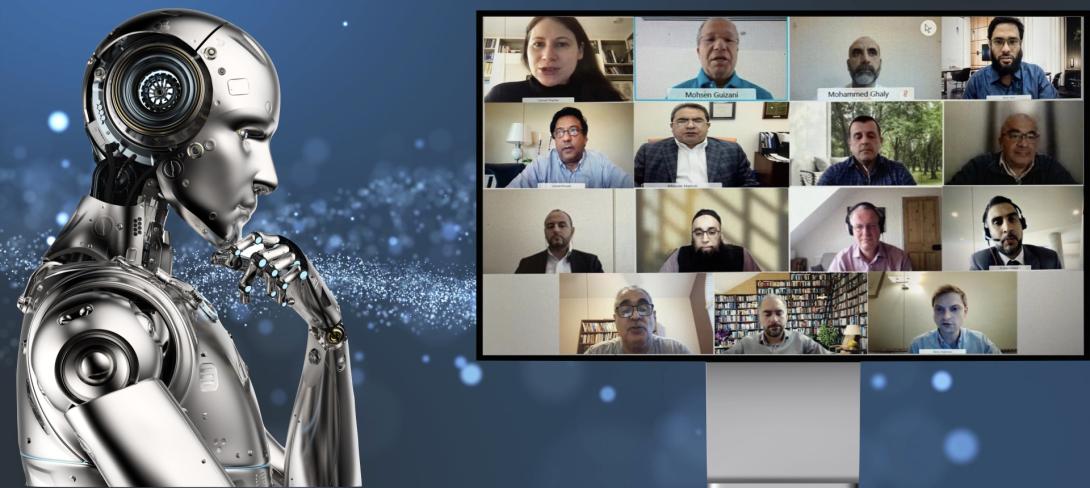
The Research Center for Islamic Legislation and Ethics (CILE) organized this seminar in collaboration with two other entities at Hamad Bin Khalifa University (HBKU), namely the College of Science and Engineering (CSE) and the Qatar Center for Artificial Intelligence (QCAI) at Qatar Computing Research Institute (QCRI).
As part of its long-term plans to examine the interplay between Islamic Ethics and Artificial Intelligence (AI), CILE held this internal seminar with the aim of enhancing the knowledge of researchers and specialists in Islamic Ethics and related fields, exploring possible avenues for examining the interplay of AI and Islamic Ethics, coordinating research projects, and eventually developing an interdisciplinary AI–Islamic Ethics discourse.
Against this background, the seminar focused on two main themes:
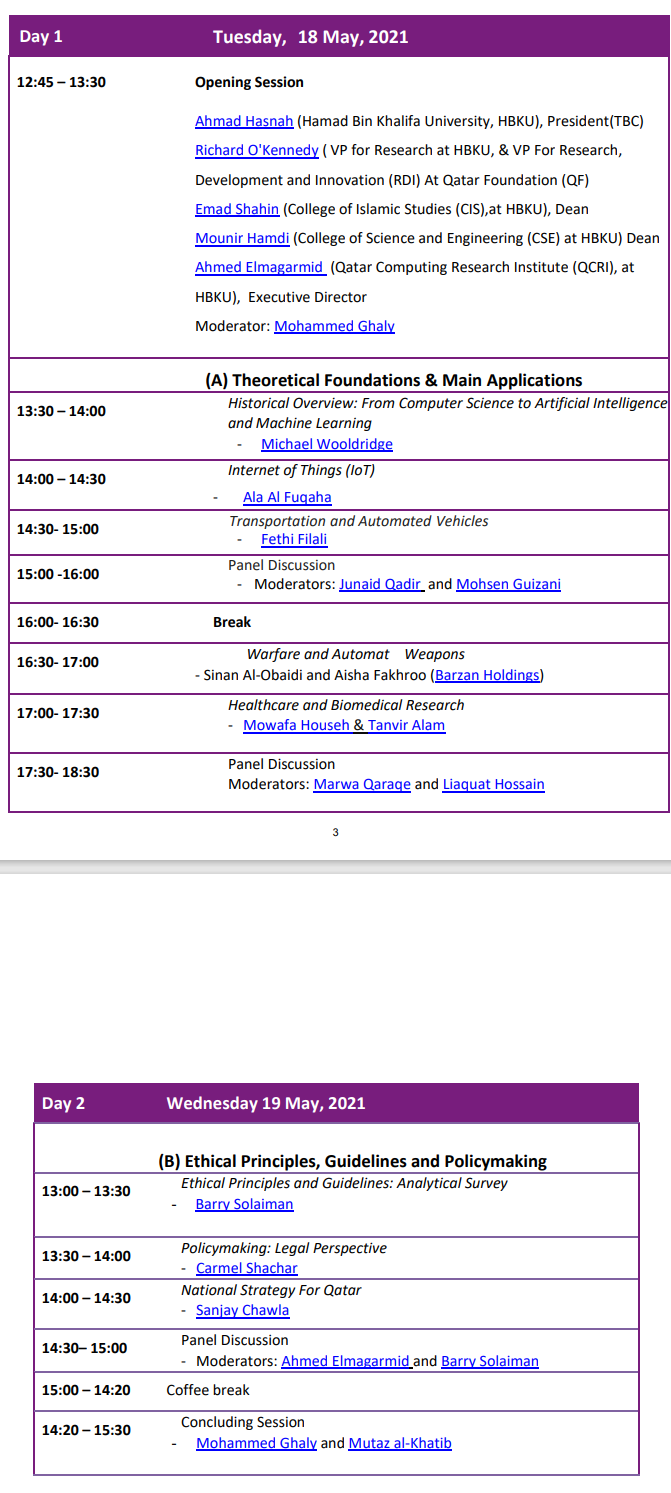
(1) Theoretical Foundations & Applications
Speakers in this theme provided a state-of-the-art overview of relevant technical issues and advancements. Each presentation covered two main points: (a) explaining the scientific and technical aspects in an accessible manner for a general educated audience, and (b) outlining the moral dilemmas and ethical questions typically encountered by practitioners in the respective fields.
(2) Ethical Principles, Guidelines, and Policymaking
Speakers in this theme analytically and critically reviewed the main ethical principles and guidelines adopted by (a) tech giants such as Google, IBM, and Microsoft, (b) transnational bodies such as the European Union and the Institute of Electrical and Electronics Engineers (IEEE), and (c) national bodies of the so-called “AI Superpowers,” including China and the United States, in addition to Qatar as a representative example from the Muslim world.
The Seminar was Convened by Dr. Mohammed Ghaly, Head of the Research Center for Islamic Legislation and Ethics (CILE).